Every February the calls start coming. "There's water shooting out of the side of the house." Or "the sprinkler valve box is full of ice." Or — the bad one — "the basement ceiling is wet." A frozen sprinkler line is among the most preventable problems in the Treasure Valley, and one of the most expensive when it happens. Here's why it happens, how to stop it next year, and what to do if you're reading this in the middle of a thaw with water everywhere.
Why Sprinkler Lines Freeze in Boise
Sprinkler pipes are buried just 8 to 12 inches below the surface in most Valley installations. Idaho's frost line can reach 24 to 30 inches in a cold January. That means the shallow pipe sections, and especially the backflow assembly above ground, regularly sit in soil cold enough to freeze.
Water expands roughly 9% when it freezes. A pipe full of water in 20°F soil doesn't just freeze — it splits. Brass and PVC backflow valves crack. PVC supply lines split lengthwise. The expansion happens slowly enough that you don't notice until the thaw, when water finds the new opening and pressurizes it.
The Single Job That Prevents All of This: The Blowout
"Blowing out" a sprinkler system means using compressed air to push all the water out of every pipe and zone before the first hard freeze. Done right, there's nothing left in the lines to freeze. Done wrong, you can break sprinkler heads, blow out poly fittings, or skip a zone entirely.
When to do it
In the Treasure Valley, the right window is between October 1 and October 25. Boise's first hard freeze typically lands between October 25 and November 5. Waiting until you "see frost in the morning" is waiting too long — by then, the shallow soil is already cold and the backflow can crack on a single overnight dip.
How a blowout actually works
- Shut off the water to the irrigation system at the main shutoff (usually in a basement, crawlspace, or near the meter).
- Connect a high-volume air compressor (at minimum 30 CFM for residential systems — most pancake compressors aren't big enough) to the test cock or blowout fitting downstream of the backflow.
- Open one zone at a time. Run each zone until water stops spraying and only air comes out. Don't blow more than 80 psi pressure or you'll damage seals.
- Repeat for every zone. The drip zones are easy to forget — don't.
- Drain the backflow assembly by opening both test cocks and the bleed valves.
- Leave the system off until spring.
Most homeowners don't own a compressor that big. You can rent one for a half-day, or pay a sprinkler company $75–150 to handle the whole thing. We do blowouts as part of seasonal maintenance and frankly the rental + half-Saturday math rarely beats just hiring it out.
The Backflow Assembly: The Most Vulnerable Part
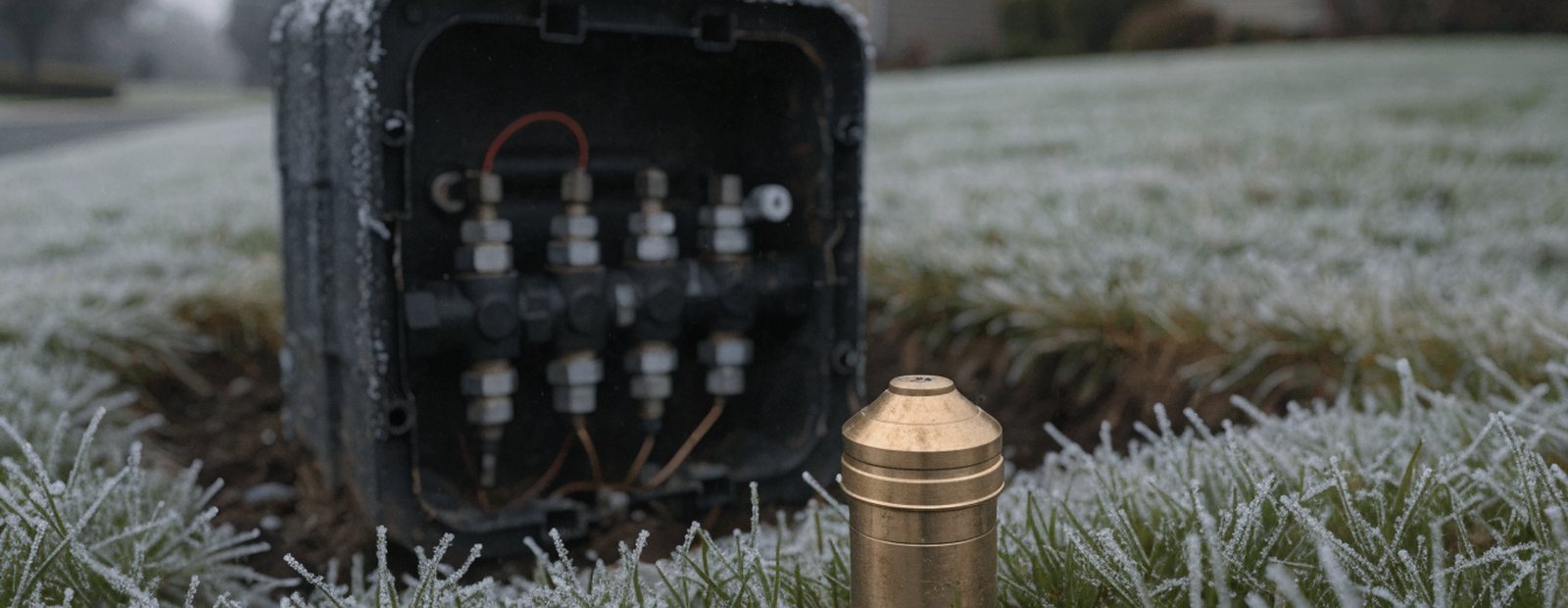
That brass valve cluster sticking up out of your landscaping is the part that freezes first. The water inside has nowhere to drain. Even with a blowout, residual water can sit in the valve body and freeze overnight if the first hard freeze comes before you've shut everything down properly.
Two cheap protections that work:
- An insulated backflow cover. $20 from any irrigation supply store. Snug fabric over fiberglass insulation. Reusable for a decade.
- Wrap with foam pipe insulation before adding the cover. Belt-and-suspenders, but cheap.
Don't just toss an old towel over it. That holds moisture and accelerates corrosion of the brass.
What to Do If Yours Already Froze
If you're seeing water around your backflow assembly during a winter thaw, or you turn on the system in April and it leaks immediately:
- Shut off the irrigation supply at the main shutoff.
- Don't try to run it again "just to see." A cracked PVC line will spray water under your foundation. A cracked backflow will dump hundreds of gallons before you find the valve.
- Inspect visually. A cracked backflow assembly is usually obvious — you'll see a hairline split in the brass or a crack in the plastic body.
- Plan on a backflow replacement. Cracked assemblies can't be reliably repaired. Expect $200–400 for the part plus an hour or two of labor.
- Walk the yard during the first run of spring. Cracked underground PVC shows up as a soft, wet spot in the lawn 5–10 feet from where the line runs.
The "October checklist" trick
The single best way to never forget the blowout: pair it with a recurring date you already remember. Halloween is too late (the freeze can come first), but the weekend you switch the clocks back is also slightly late. Tie it to the third weekend of October. Put it in your calendar now.
Other Outdoor Plumbing to Winterize
While you're out there:
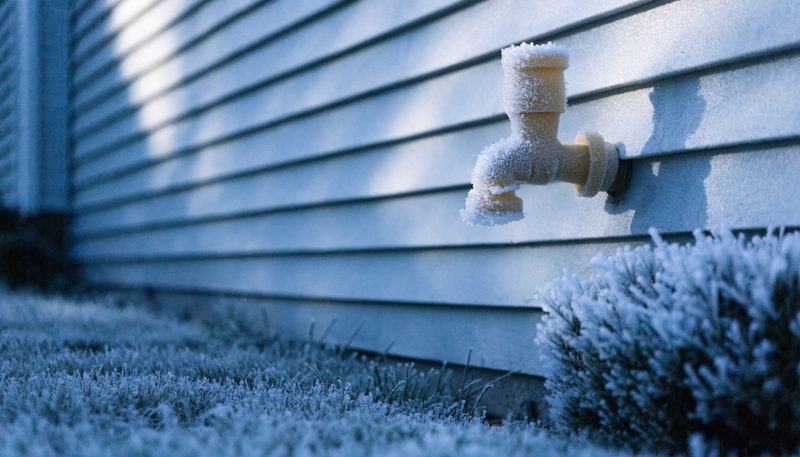
- Disconnect garden hoses (the #1 cause of frozen hose bibs and split interior pipes)
- Install foam insulated covers on all exterior faucets
- Drain the line to any frost-free hose bibs by opening them after disconnecting the hose
- Drain and shut off any swamp cooler lines on the roof
This is also a good time to do a full home winterization pass — most of the work overlaps and it's all on the same weekend.