Boise's drinking water comes from some of the cleanest aquifers in the country. It's also some of the hardest. Depending on where in the Valley you live, your water carries 200 to 400+ parts per million of dissolved calcium and magnesium. Anything over 180 ppm is classified as "very hard." For comparison, Seattle's water comes in around 25 ppm. Your house is being slowly mineralized every day.
The result, over time, is a steady tax on your fixtures, appliances, and especially your water heater. Here's what hard water is doing in your house right now, and the practical fixes that actually work.
What Hard Water Actually Damages
Your water heater (this is the big one)
Hard water builds a layer of calcium scale on the bottom of a tank water heater. The scale acts as insulation between the burner and the water, so the burner has to run longer to heat the same gallons. Energy use climbs 15–30% over a few years. Eventually the scale layer gets thick enough to crack the glass tank lining. Then you're shopping for a new water heater.
Lifespan in the Valley: A standard tank water heater is rated for 10–12 years. In hard-water Treasure Valley homes without softening, they typically last 6–8.
Faucets and showerheads
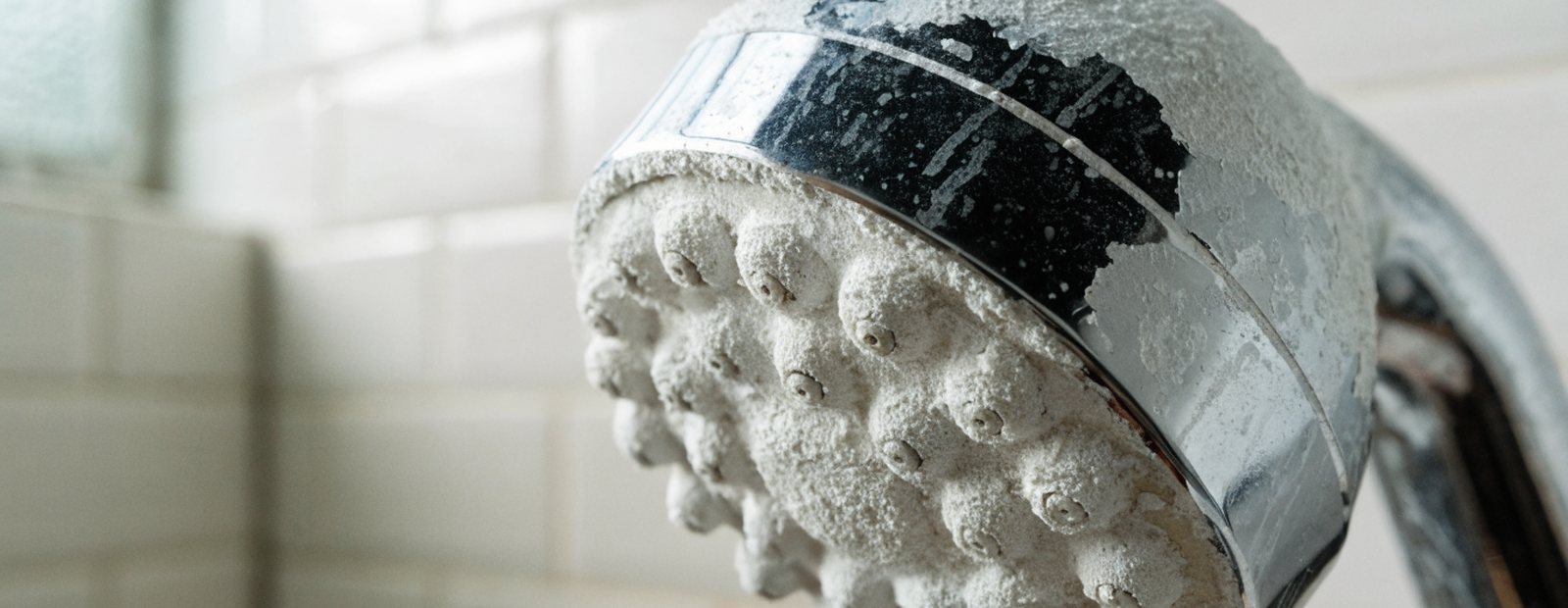
That white crust you scrub off the showerhead? Same stuff that's slowly narrowing the inside of your supply lines. Faucet aerators clog and need replacement every couple years. Diverter valves in tub spouts seize. Cartridge faucets develop scale around their O-rings and start dripping.
Dishwashers and laundry machines
Hard water makes detergents work harder. You'll use 20–40% more detergent to get equivalent cleaning. Glassware comes out spotted. Heating elements scale over and burn out earlier. Whites turn dingy. Towels feel stiff.
Toilets
The mineral ring at the waterline. The slow flush rate after a few years. The corroded fill valve. All hard water.
Tile, shower glass, and chrome
The cosmetic stuff. Hard water leaves spots, films, and white deposits on every surface it dries on. Glass shower doors are the worst — once the minerals etch into the glass surface, you can't fully restore them.
The Three Real Solutions (in Order of Cost)
1. Flush your water heater annually ($0–50)
This is the highest-ROI hard-water maintenance task in the Valley, full stop. Attach a hose to the drain valve at the bottom of the tank, run it to a floor drain or outside, and let it flow until the water runs clear. Do it every fall. This single habit will add 3–4 years to a tank water heater's life in this water.
For tankless water heaters, the equivalent is a vinegar descale flush once a year, which most plumbers (and we) will do as a service call. Skipping it on a tankless will void the warranty.
2. Point-of-use fixes ($25–200)
- Filtered shower heads. Some are real (KDF-55 media). Most are marketing. Won't soften the water, but will catch some of the scale and sediment.
- Spot-Free rinse for the dishwasher. Cheap, works.
- Weekly squeegee on shower glass. Sounds silly, prevents permanent etching.
- White vinegar. The single best hard-water cleaner. A 50/50 vinegar-water spray on chrome, faucets, and tile lifts the deposits without scrubbing.
3. Whole-home water softener ($1,500–3,500 installed)
The real solution. A salt-based softener removes the calcium and magnesium before they reach your fixtures. Homes with softeners in the Valley get noticeably longer life out of every appliance, use less detergent, and stop fighting mineral buildup. The math typically pays back the installation in 5–7 years just on water heater and appliance longevity.
If you're skeptical of salt-based systems (or your HOA limits them), salt-free "scale conditioners" do reduce buildup, but they don't actually soften the water — they just change the form of the minerals so they don't stick as easily. Better than nothing. Not as good as a real softener.
The simplest test
If your soap doesn't lather, your towels feel stiff, and you have a white ring around the toilet, you have very hard water. Boise Water Renewal Services publishes hardness data by zone — most Treasure Valley addresses fall between 16 and 22 grains per gallon, which is solidly in "very hard" territory.
What to Do Right Now
- Flush the water heater this fall — even if you've never done it. Add an hour to your winterization day.
- Replace any faucet aerators that haven't been swapped in 3+ years. They're $4 at the hardware store.
- Soak showerheads in vinegar once a quarter to keep flow rates strong.
- If your water heater is over 8 years old, start budgeting for replacement. Don't wait until it leaks.
- Get a water test if you're on a well (common in rural Eagle, Star, and Kuna). Well water out here is often even harder than city water and sometimes has iron and manganese too.
We do water heater installs, faucet replacements, and general kitchen and bath plumbing work across the Valley — and we'd rather help you get a few more years out of what you have than sell you a new one prematurely.