Treasure Valley decks get punished. Summer afternoons hit 100°F and the boards bake. Winter brings freeze-thaw cycles that drive moisture into every crack. Spring brings sprinkler overspray. By August, the air is so dry it pulls moisture out of the wood from the inside out. Most decks in the Valley last half as long as they could because nobody touched them between when the contractor left and the day the boards started cupping.
Here's the maintenance routine that fights all of that — broken into when it actually needs to happen.
Early Spring (March–April): The Inspection
Before you fire up the grill for the season, walk the deck slowly with a screwdriver in your hand. You're looking for:
- Soft spots — anywhere the screwdriver sinks in easily, especially near posts, around stair stringers, and where boards meet the house.
- Popped fasteners — nails or screws standing proud of the board surface. They'll catch a kid's foot or a dog's paw.
- Loose railings — give every post a firm shake. Wobble means trouble.
- Splits and cracks radiating from screws or knots — these are the boards that need replacing this year.
- Ledger board flashing — where the deck attaches to the house. If you see rust, gaps, or rot here, stop using the deck and call someone. This is the #1 cause of catastrophic deck collapse.
Late Spring (May): Wash and Stain
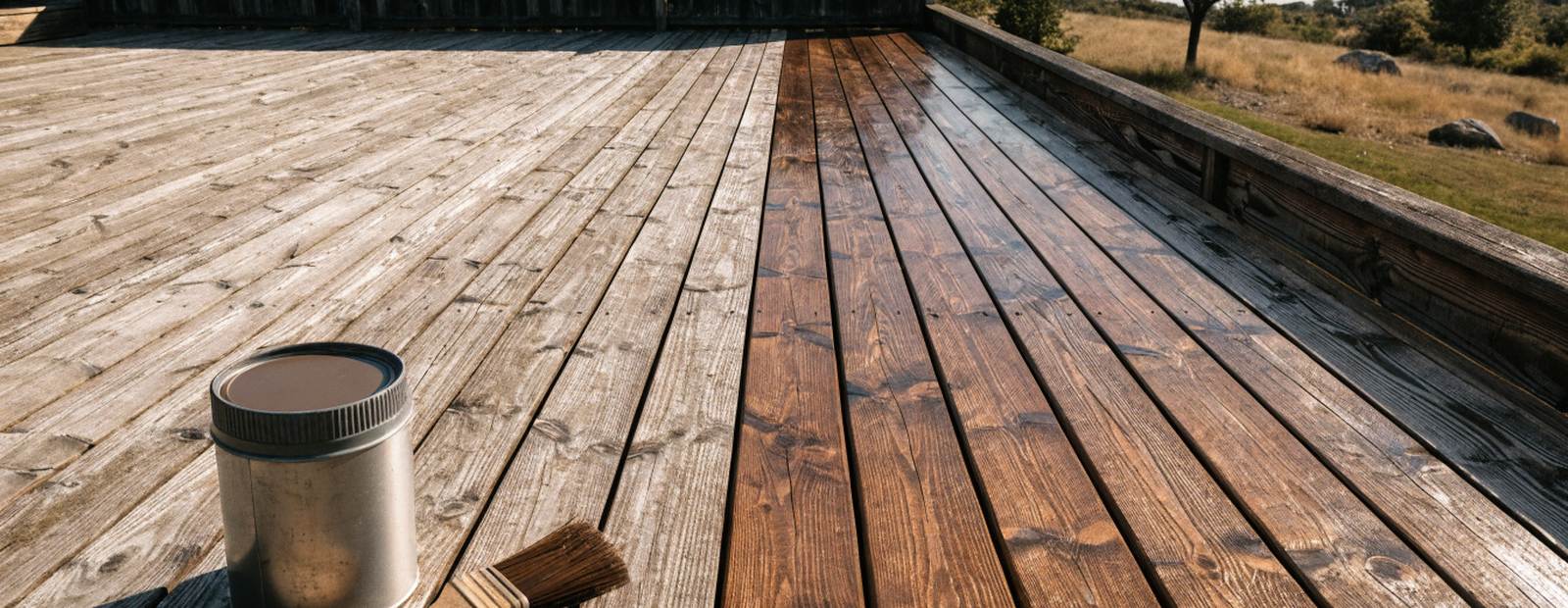
Idaho's UV is brutal. A deck loses 30–40% of its stain's protection just from sun exposure in a single Boise summer. Reapplying every 2–3 years (every 1–2 years for south- and west-facing decks) is the difference between 25 years and 10.
- Wash the deck with a deck cleaner — not just water. Oxygen bleach products work well; chlorine bleach kills the wood fibers.
- Let it dry for 48 hours. Truly dry. Idaho's dry air makes this fast, which is great.
- Apply a penetrating semi-transparent stain. Avoid film-forming finishes — they peel here.
- Stain on a cloudy day or in the early morning. Direct 90°F sun will flash-dry the surface and leave lap marks.
Summer (June–August): The In-Season Stuff
Mostly: keep it clean. Sweep weekly. Pollen, juniper berries, and lawn clippings hold moisture against the boards. If your sprinklers hit the deck, adjust them. Same goes for hose-end nozzles being left dripping — that's how soft spots start.
One small thing that helps a lot: lift up any planter pots, doormats, or grill mats and look underneath every few weeks. The wood under those is shaded, wet, and rotting twice as fast as the rest of the deck.
Fall (September–October): The Pre-Winter Pass
- Clear leaves, pine needles, and debris between every board.
- Check that the deck drains — water should run off, not pool.
- Trim back vines, shrubs, and anything pressing against the deck framing.
- Pull patio furniture off the wood for winter, or use risers — wet metal feet leave permanent rust rings.
- Inspect concrete patios for cracks and seal them now (sealer cures poorly below 50°F, so don't put this off).
Concrete Patios: Don't Skip These
Concrete in Idaho cracks because water gets into hairline fissures, freezes, expands, and widens them. Every freeze-thaw cycle makes them worse. A $30 tube of polyurethane crack sealer applied in October prevents the $4,000 patio replacement five winters later.
If you're seeing surface flaking (called "spalling"), that's de-icing salt damage. Don't use rock salt on the patio. Switch to calcium chloride or, better, sand for traction.
The 20-year deck checklist
Wash and re-stain every 2 years. Replace any soft board immediately, not "next year." Re-torque every railing post connection every spring. Keep furniture off the wood when not in use. Do that, and a $15,000 cedar deck will outlast the people who built it.
When to Call Someone
Anything structural — ledger boards, joists, posts, footings, stair stringers — is where DIY gets dangerous. Same for decks more than 30 inches off the ground. We do deck and fence repair across the Valley, and most of what we see is rot that was visible for two summers before anyone noticed it. Catch it early.